
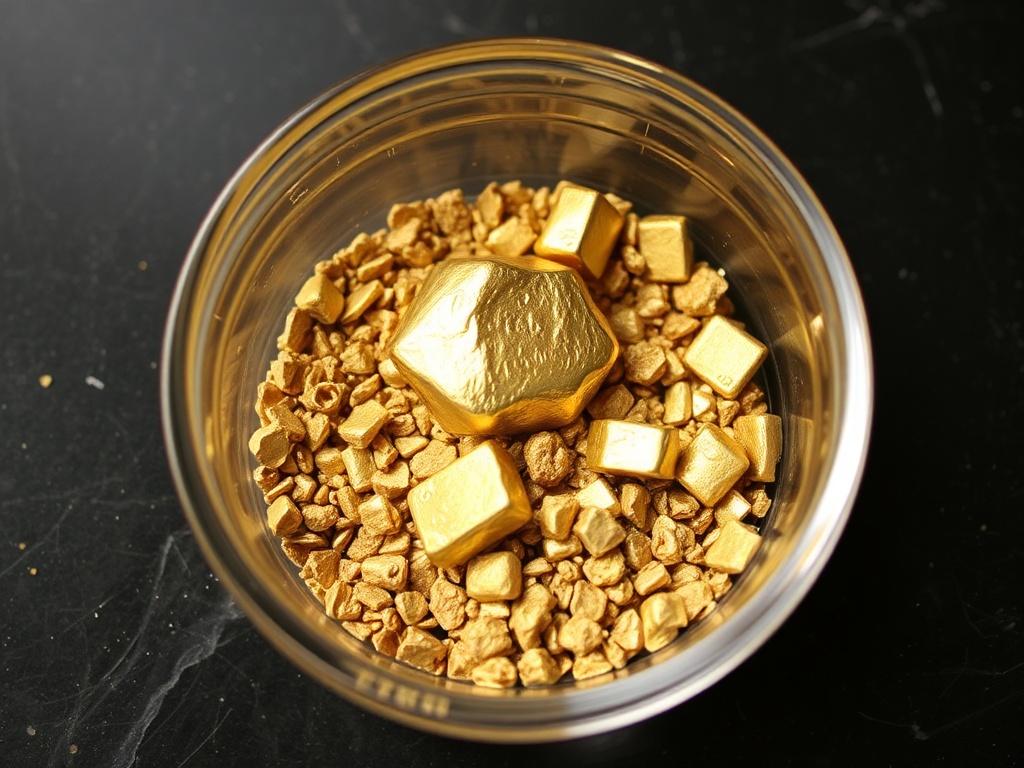
Gold carries its own quiet confidence—a timeless metal that has sparked trust and curiosity for centuries. If you’ve inherited a piece, bought a bargain, or simply want to know what you’re holding, you don’t need to rush to a jeweler right away. With a measured approach, the right tools, and a bit of patience, you can perform several at‑home checks that give you a clear sense of a piece’s authenticity and karat range. This guide walks you through safe, practical steps that balance curiosity with caution.
Non-destructive checks you can perform without damaging the piece
The first line of defense is observation. A lot can be learned from the way a piece looks, feels, and wears. Start by inspecting the surface under good light and with a loupe or magnifying glass. Genuine gold often has a uniform sheen, even at the edges, and wears in a particular way depending on its alloy and finish. Look for inconsistent coloring, patches of brightness where plating has worn away, or visible layering that hints at a base metal beneath a thin gold coating. These are common signs of plating or gold-filled fabrication rather than solid karat gold.
Next, consider magnetism. Gold itself is non‑ferrous, meaning a strong magnet should not attract a true gold piece. If a magnet clings persistently, you may be looking at a base metal that has been plated or fused to resemble gold. This simple screening step won’t prove authenticity, but it often catches obvious counterfeits. Remember that some non-magnetic metals can still be plated over magnetic cores, so magnet tests must be paired with other checks for reliability.
Another non-destructive approach is to check for hallmark accuracy and consistency. Many gold items bear stamps such as 10K, 14K, 18K, 24K, or country-specific marks like 585, 583, or 750, along with maker initials and hallmarks. If a mark looks suspiciously light, etched, or poorly aligned with the metal’s color, that’s a clue to investigate further. Keep in mind that marks can be forged or removed, so don’t rely on stamping alone. A hallmark is a strong hint, not a verdict.
In my years working with jewelry, I’ve learned to combine these visual cues with a quick check of weight and silhouette. A heavy, dense feeling often accompanies genuine gold, but weight alone isn’t proof—copper or other dense metals can mimic heft. Look for consistency: similar pieces from the same era typically share a characteristic patina and wear pattern. If a piece looks new or unusually pristine in a way that clashes with its age, pause and test more rigorously.
Density and weight: a simple at-home check
Density is a powerful differentiator because gold’s density is unusually high. The idea is simple in theory: measure the mass and the volume, then compare the resulting density to known values for gold and common alloys. In practice, you’ll need a precise scale and a way to measure the volume the object displaces in a liquid, usually water. This is a non-destructive method that gives you a ballpark figure, not an exact certification, but it can quickly flag pieces that aren’t likely to be solid gold.
Start with a clean, dry piece and a scale that reads to at least 0.01 g. Weigh the item carefully and note the mass. Next, fill a graduated cylinder or tall graduated beaker with water and record the starting volume. Submerge the item slowly without touching the sides and observe the new water level. The difference in volume equals the volume of the object, in mL. Calculate density as mass (g) divided by volume (mL). For reference, pure gold has a density of about 19.3 g/mL. An alloy like 18K gold (75% gold) will have a lower density, closer to around 15–19 g/mL depending on the exact alloy mix. This is a rough guide, but it helps distinguish solid gold from many non-gold metals or heavily plated pieces.
Two caveats help keep this method practical. First, irregular shapes and air pockets can skew volume measurements, especially for small or porous items. Submerge the object slowly and avoid air bubbles that cling to the surface. Second, any coating can throw off the reading: if the piece is gold-plated, the outer layer may give a false sense of density until the surface is compromised. If your density result sits squarely in the gold range but you still suspect plating, move on to more definitive tests.
The scratch and touchstone method: how it works and how to do it safely
Touchstone testing is a traditional, non-destructive method that relies on the chemical differences between karats when acids are applied to a clean stone. You scratch the piece on the touchstone to leave a visible gold trail, then apply calibrated acids to the trail. The reaction, or lack thereof, helps place the piece within a karat range. This method requires care, a proper testing kit, and a clear understanding of what the acids are doing. If you’re curious about the phrase Как проверить пробу золота в домашних условиях, this is one of the techniques you’ll see referenced in many home-testing guides—though modern kits now offer safer, more controlled options.
To begin, lay out your supplies on a stable, non-reactive surface: a touchstone, a small sharpening stone or metal file for scratching, a set of karat acids (often 10K, 14K, and 18K), and a dropper or well‑spaced applicators. Scratch a thin line on the touchstone with the piece you’re testing. The line should be crisp but not so deep that you gouge the stone. Clean the surface around the line to ensure no residue interferes with the acid’s action.
Next, apply the weaker acids in ascending order. Start with 10K acid if your kit includes it, and observe the line for a set period, typically a minute or two. If the line remains unchanged, you’re likely at or above that karat. If it dissolves or smears, you know the piece is below that karat threshold. Repeat with 14K acid, then 18K acid as needed. The key is comparison—keep notes or a simple chart to track how each acid affects the line. A line that remains on the stone after 18K acid suggests the piece is 18K or higher; a line that dissolves early indicates a lower karat.
Safety matters here. Acids are dangerous; wear eye protection, chemical-resistant gloves, and work in a well-ventilated area. Never mix acids, and store them according to the manufacturer’s instructions. When you’re done, neutralize or thoroughly rinse the test area and dispose of any waste according to local regulations. If you have questions about handling or disposal, consult the kit’s guide or a professional jeweler.
Acid tests: when and how to use a testing kit
A dedicated acid test kit is the most direct at-home method to estimate karat levels. These kits provide a touchstone, reference metals, and multiple acids designed to differentiate common karats. They’re widely used by hobbyists and small-scale sellers because they’re affordable, portable, and straightforward when used correctly. The acids are strong enough to dissolve low-karat alloys but gentle enough to leave higher-karat metals relatively intact for comparison.
What you’ll typically find in a kit: a set of acids labeled for 10K, 14K, 18K (and sometimes 22K), a touchstone, cleaning cloths, and an instruction sheet. Some kits include reference metals that you can scratch alongside your item to provide side-by-side comparisons. A good practice is to mark the reference line on the touchstone with your own sample from a known gold piece, so you can visually compare the reactions under the same conditions.
Here’s a practical testing sequence you can follow. Scratch a clean line on the touchstone, then apply the 10K acid. Observe for color changes or dissolution within 1–2 minutes. If the line remains intact, your piece is at least 10K or higher. Proceed to 14K acid; if the line dissolves at 14K, your item is below 14K. If it survives, test with 18K acid. A line that holds on 18K acid suggests 18K or higher. Keep in mind that some modern alloys are engineered to mimic traditional karats, so the acid test is informative but not definitive on its own. When in doubt, seek a professional assessment.
Common fraud signals and red flags
Gold is simple in composition but expensive and appealing enough to attract counterfeiters. One common trap is gold plating on a base metal: the outer layer might look convincing, but edge wear will reveal the metal underneath. If you find exposed metal at clasps, edges, or carvings, that’s a red flag. Often the plating wears off in high-contact areas first, creating a pattern of color irregularities that doesn’t align with natural wear on genuine solid gold pieces.
Another tell-tale sign is a mismatch between weight, tone, and size. An item might feel heavy but still fail density tests due to a core metal with similar density. Conversely, an unusually light piece with a bright, faultless appearance might be gold-plated or a lower-karat alloy inside. When the stamps don’t align with the piece’s color or feel, or they look forged or gouged, treat the item as suspicious and proceed with more tests or professional evaluation.
One more caution: some rings and bracelets are “gold-filled” or “gold‑plated” but can pass casual inspections. These items may have a thick outer gold layer with a less expensive core. If you’re buying, ask for documentation, assay results, or a reputable seller with a return policy. If you’re testing a treasured heirloom, a layered approach—visual checks, magnetism, density, touchstone, and acid tests—will give you a robust picture of what you actually own.
What you can do to protect yourself: getting a professional opinion
When you’re unsure, a professional opinion is worth the investment. A reputable jeweler or gemologist can perform an X-ray fluorescence (XRF) analysis, which identifies the exact composition of the metal and the karat with a high degree of accuracy. XRF is non-destructive to the surface and provides a definitive reading of the alloys present, including the base metals in any plating. For many buyers and collectors, an independent assay report from a recognized laboratory adds confidence to a purchase or appraisal.
If you’re considering professional testing, ask about the method, accuracy, and potential costs. In a typical jewelry shop, a karat test might be bundled with an inspection or a repair estimate. Labs and assay offices may charge for a formal report, but the results are generally robust and widely accepted in trades and insurance valuations. Bring any documentation you have—receipts, previous assay results, or hallmarks—so the assessor can triangulate the information.
For personal records, keep a small file of the tests you’ve performed at home and the results from professionals. The combination of at-home screening plus an official assay can prevent miscommunications with sellers, insurers, or heirs. If you’re purchasing an expensive item online or from a marketplace, request verifiable documentation before finalizing the deal. It’s not a sign of distrust to insist on proof; it’s prudent due diligence.
Practical alternatives and limitations of home testing
Home testing is valuable, but it has its limits. Most home tests can help you distinguish solid karat gold from base metals and heavy plating, but they cannot guarantee purity with the same certainty as professional laboratory methods. Environmental factors, variations in alloy recipes, and enamel or decorative coatings can all mask the truth. The best approach is to treat home tests as screening tools that narrow down possibilities and inform your next steps.
For instance, if density and acid tests suggest a high karat, but the piece is unusually lightweight or shows spots of discoloration, you may be dealing with a gold-filled item, a vermeil piece, or a modern alloy designed to imitate higher karat values. In such cases, consult a professional for confirmation. If you’re investing meaningful sums or insuring valuable pieces, formal certification is a wise move.
Tables of karat values and what to expect
| Karats | Gold content | Common alloys | Typical color notes |
|---|---|---|---|
| 24K | 100% pure gold | None or very small alloy additions in specialty items | Bright yellow; very soft |
| 18K | 75% gold | Copper, silver, zinc | Rich yellow to warm gold; durable for daily wear |
| 14K | 58.3% gold | Nickel or alternative alloys; copper common | Softer yellows with visible warmth; common in U.S. jewelry |
| 10K | 41.7% gold | Base metal core; zinc, copper, silver | Paler gold or slightly pinkish hue; higher hardness |
Real-life examples: how the process plays out
Case 1: a family ring with a “14K” stamp. The ring weighs similarly to other 14K pieces, but upon close inspection, the edge plating looked uneven. A quick magnet test showed no attraction, and the density test placed it within the gold range, but the scratch on the touchstone revealed a subtle delay before the 14K acid began dissolving. The conclusion? The ring was likely 14K gold plated over a less expensive core, not solid 14K. A professional appraisal confirmed a gold-filled construction, valuable as a keepsake but not pure 14K gold.
Case 2: a vintage pendant with no marks. The density came in around the 18K range, and the 18K acid line was stable while the 22K acid gave a trace of dissolved edges. The piece looked robust and wore well, so a jeweler suggested it might be 18K solid gold with a rich patina. An official assay later confirmed 18K solid gold, matching both the density and acid test results. These practical checks saved the buyer from overpaying for a faked piece and provided confidence in the purchase.
The ethics of testing and what to share with others
Testing gold responsibly isn’t just about numbers; it’s about transparency. If you’re selling or gifting a piece, be honest about what your tests indicate, and be clear about their limits. Share the methods you used, including whether you used home tests, professional testing, or both. This helps establish trust with buyers, heirs, or insurers. It’s also a good habit to store records: keep a short log of the date, the method, and the result for each item you test.
In the end, the goal isn’t to prove something false but to learn what’s true and make informed decisions. A well-documented testing process can prevent disputes and miscommunications down the line. And if you ever feel uncertain, there’s no shame in turning to a trained professional—gold is worth getting right.
If you’re curious about how far you can go without professional equipment, you can explore the balance between safety, accuracy, and practicality. For readers translating this into Russian or exploring the query Как проверить пробу золота в домашних условиях, note that many online guides simplify the process, but the real value comes from combining several checks and knowing when to seek confirmation from a lab or jeweler. The goal is not to be perfect on the first try, but to build a trustworthy, repeatable method that serves you well.
Across the years, I’ve found that a thoughtful mix of observation, physics, and chemical testing gives the most reliable at‑home assessment. You won’t replace a lab, but you can arrive at a practical, well-supported conclusion about a piece’s karat and authenticity. With patience, care, and a few reliable tools, you’ll gain clarity—and that clarity is worth more than a single price tag.