
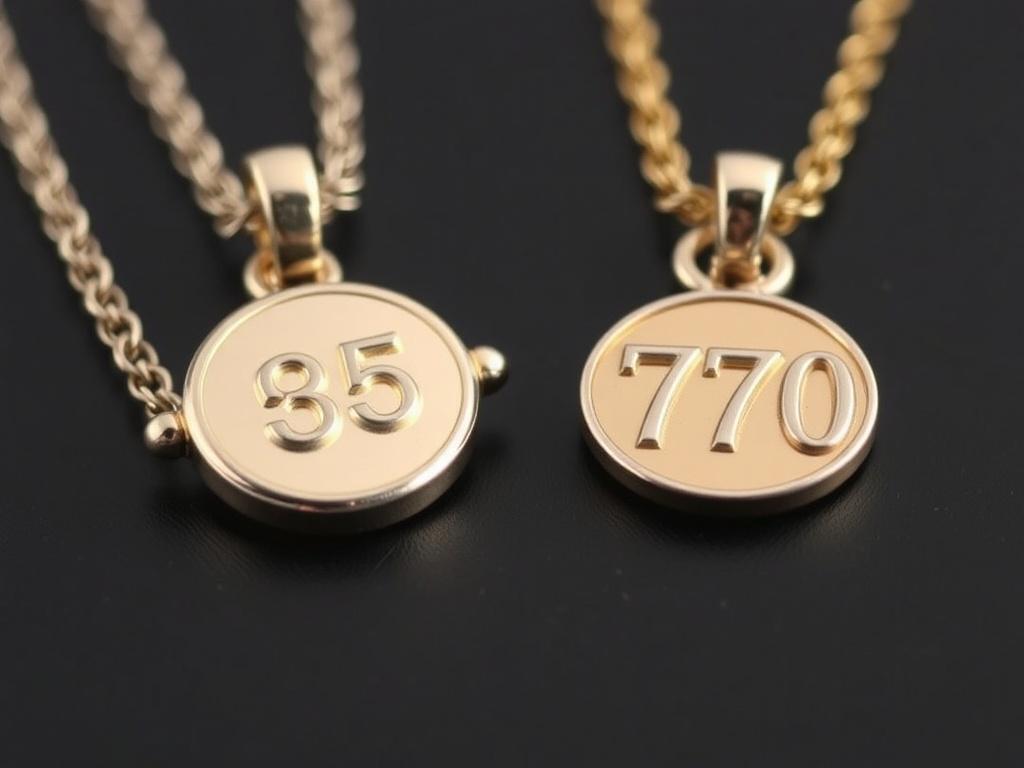
When you’re shopping for gold jewelry, the numbers on the tag can feel like a code. 585 and 750 aren’t just meaningless digits—they signal how pure the gold is and what blends are used to give the piece strength, color, and character. Getting a handle on what those numbers mean can prevent mismatched expectations, protect your budget, and help you wear what you love without constant worry about wear and tear.
What the numbers really mean
At the core, 585 and 750 are indicators of fineness, the proportion of gold in an alloy. In plain terms, 585 means 58.5% pure gold, with the remaining 41.5% made up of other metals such as copper, silver, or zinc. 750, by contrast, contains 75% gold, with the rest assembled from other metals to improve hardness and durability. All the way up to 24 karat gold, which is pure gold with no alloying metals, these numbers help jewelers dial in color, strength, and price.
In many markets—especially the United States and Canada—14k gold (which historically aligns with 585 in some regional conventions) is the workhorse for everyday jewelry. 18k gold (matching 750 in terms of pure gold content) sits at a higher tier, delivering a richer color and a more luxurious feel but at a higher cost and with slightly more brittleness. The exact alloy chemistry can vary by manufacturer, so a piece labeled “18k yellow gold” might contain trace elements that shift its hue just a touch from one maker to the next.
Durability and daily wear
Durability is the first practical question people ask when choosing between 585 and 750. The simple version: 14k (585) is tougher and more resistant to scratches and denting than 18k (750). The extra alloy content acts like armor, absorbing impact and reducing the chance of noticeable wear from everyday activities. For engagement rings, wedding bands, or pieces you wear daily, that durability can translate into fewer maintenance surprises over the years.
However, the higher gold content in 18k yields its own kind of resilience: it resists tarnish and retains a warm, vivid color that many people associate with luxury jewelry. That color saturation can matter a lot in high-end pieces, particularly if you’re drawn to a押 rich yellow or rose tone. The trade-off is softness; 18k alloys can scratch more easily and may show dings sooner if you’re not careful with wear and storage. If your lifestyle includes heavy keyboard tapping, outdoor work, or active sports, 14k might be the smarter everyday choice.
Color, shine, and texture
Gold’s color is one of its most compelling attributes, and fineness plays a big part in the final appearance. Higher gold content generally produces a deeper, warmer tone. An 18k piece tends to glow with a luxurious, often more saturated hue, which many people associate with premium jewelry. 14k, while still beautiful, can read a touch lighter or brighter in some lights because of the higher proportion of alloy metals that influence hue and reflective quality.
That said, the alloy mix isn’t the whole story. White gold, rose gold, and even greenish hues come from how the other metals are blended and how the piece is finished. Rhodium plating, typical for white gold, can brighten the surface and add a cool, icy shine, but plating wears away with time, revealing the underlying alloy. With 18k white gold, you might notice a warmer, less stark white look as the surface ages. The point is simple: color is a blend of gold content, metal mix, and surface treatment, and a given piece can look strikingly different from another of the same fineness depending on these choices.
Cost, value, and long-term ownership
Price naturally tracks gold content. In broad terms, 18k pieces cost more per gram than 14k because you’re paying for a higher percentage of precious metal. Yet price isn’t the only factor. The durability of 14k often translates to lower maintenance costs over the lifetime of the piece: fewer refinishes, less frequent polishing, and less worry about daily scratches showing up. For someone shopping a casual, everyday ring or bracelet, the cost-to-maintain ratio can tilt in favor of 14k, especially if you live an active lifestyle or have a tight budget.
On the other hand, for a family heirloom or a piece intended to be worn on special occasions, 18k brings a certain emotional and aesthetic value. The color depth and the perception of luxury can justify the higher upfront price for many buyers. It’s also worth considering resale value. In some markets, 18k gold commands a premium among collectors and connoisseurs, while 14k remains a practical, universally trusted choice for everyday wear. If you’re balancing budget against longevity and prestige, there isn’t a one-size-fits-all answer—there’s a personal calculation you should run with your jeweler.
| Fineness | Gold content | Typical alloy metals | Common uses |
|---|---|---|---|
| 585 (14k) | 58.5% gold | Copper, silver, sometimes zinc | Everyday rings, bracelets, earrings; durable, good value |
| 750 (18k) | 75% gold | Copper, silver, sometimes palladium or zinc | Fine jewelry, statement pieces; richer color, softer feel |
Choosing for different jewelry types
The kind of jewelry you’re buying matters as much as the fineness. A ring that sits on your finger all day needs a different balance of durability, comfort, and style than a delicate pendant you wear only on weekends. For most people, a practical rule is to align the piece’s function with the most forgiving fineness that still delivers the look you want.
Rings and bracelets, which endure friction, contact with skin, and occasional bangs against hard surfaces, often fare better in 14k. The alloy’s strength helps resist bending and scratches, and you won’t flinch at the thought of replacing a scratched ring as frequently as a piece worn only for special occasions. For earrings that are worn daily, 14k can be a smart choice if you’re sensitive to maintenance, as the less brittle alloy reduces the risk of bending or loosening hoops over time.
Fashion and fine jewelry compromises
For those who crave a deeply saturated color and a premium feel, 18k is tempting. It’s particularly appealing for engagement rings, wedding bands, and timeless pieces designed to be treasured. The flip side is the care: you’ll want to park the ring in a soft pouch during rough outdoor activities and plan for occasional professional polishing to maintain the glow. If you’re drawn to white gold’s brightness, be mindful of rhodium plating needs; plating can wear off and require maintenance to keep the bright, cool finish.
Tools and techniques also influence a piece’s practical life. A skilled jeweler may reinforce hinges, clasps, and shanks in 18k to compensate for softer alloys, or they might opt for 14k designs with stronger structural builds. When you’re choosing, ask about how the finishing, setting, and band width affect wear. A broader band on a 14k base can be nearly as durable as a thinner 18k ring, with a different look and feel.
Allergies, skin compatibility, and care
Nickel-free is a common concern for sensitive skin, but with gold jewelry, the good news is that nickel is rarely used in modern, reputable gold alloys. Still, some white gold or certain regional formulations can leg into the alloy or plating more than you expect. If your skin reacts to metal, talk to a jeweler about nickel-free options and consider purchasing pieces that are either solid gold (no plating) or plated with a durable coating that’s known to withstand daily wear.
Another factor is thickness of plating for white gold pieces. If you see a “gold vermeil” label—pigmented gold plating on sterling silver—remember that the base is not solid gold, and wear can reveal the base metal over time. For long-term skin compatibility, many buyers prefer solid 14k or 18k pieces without plating, especially for items that sit directly on the skin, like rings and bracelets. Your jewelry should feel comfortable and reassuring, not like a compromise you’ll notice as soon as you slip the piece on.
Care and maintenance: keeping color and shine
How you care for 14k versus 18k can influence how often you’ll need professional cleaning or polishing. Because 14k contains more alloy metals, it can be more resistant to scratches and dulling in daily wear, which means less frequent upkeep for some pieces. However, 18k’s higher gold content gives you a deeper, longer-lasting luster that won’t fade as quickly with normal use, even as it remains more prone to shallow scratches if treated roughly.
Cleaning routines are straightforward. A mild dish soap solution with warm water, a soft brush, and a gentle rinse can restore brightness without harming either fineness. Avoid aggressive cleaners or ultrasonic machines on 18k pieces with soft stones, since some stones and settings can be damaged by vibration or harsh chemicals. When in doubt, consult the jeweler who made the piece about the right routine for your specific alloy and setting.
What jewelers wish you knew
From the studio perspective, a lot of the decision comes down to lifestyle, price, and the story you want the piece to tell. Big designers often lean toward 18k for their flagship lines, because the color and perceived value make a strong impression. Small studios, meanwhile, frequently use 14k to deliver durable, affordable jewelry that can be worn every day without constant maintenance. Both approaches have their merits, and a thoughtful jeweler will guide you to the alloy that matches your life, not just your budget.
Personally, I’ve designed pieces in both fineness, and the choice always starts with the wearer’s day-to-day. A designer friend once built an heirloom‑quality pendant in 18k, knowing it would require careful handling and periodic refinishing. The client valued the warmth and radiance above the risk of extra care. In another case, a busy nurse preferred 14k due to its rugged durability and the peace of mind that comes with tougher wear. The takeaway is clear: let your daily rhythm dictate the choice, then use aesthetics as the final brushstroke.
Practical decision guide: a quick path to the right pick
To make this decision less overwhelming, here’s a simple framework you can apply in the moment you’re in a jewelry shop. Start with your lifestyle and budget, then consider the piece’s color and sentiment, and finally confirm with your jeweler about the specific alloy used.
- Assess daily wear: if you’re active, have kids, or work with your hands, lean toward 14k for durability and budget friendliness.
- Consider color goals: if you want a deeper, richer color and a more luxurious feel, 18k is appealing, with the caveat of higher cost and softer wear.
- Ask about the exact alloy: what metals are blended, is there plating, and will plating wear off over time?
- Think about maintenance: how often will you polish or replace? Does the piece come with a maintenance plan or warranty?
- Reflect on future plans: if this could become an heirloom, the 18k option might be worth the investment for long-term prestige and color.
As you consider these points, a conversation with a trusted jeweler becomes your best tool. Ask to see side-by-side samples in 14k and 18k, observe how the color shifts in different lighting, and feel the weight and comfort of each option. The physical sensation—how a ring slides onto your finger or how a necklace sits against your collarbone—often tells you more than numbers on a tag.
Regional and market nuances: a quick tour
Markets around the world approach gold fineness with subtle preferences. In the United States, 14k gold is the default for many mid-range pieces, prized for its durability and broad range of price points. In parts of Europe, 18k gold is more common for fine jewelry, partially because of consumer expectations around luxury and the romantic aura of higher gold content. In Russia and several neighboring markets, 14k or 585 is a long-standing standard for everyday jewelry, with 18k reserved for premium lines or personal commissions. These regional tendencies aren’t rules, but they color the typical shopping experience and influence how a piece is perceived in price and prestige.
That regional flavor matters because it informs availability and resale dynamics. A piece that’s absolutely stunning in 18k may be less common in a market where 14k dominates, and vice versa. If you’re shopping internationally or comparing brands, it pays to learn what the local expectations are and how a maker translates fineness into color, durability, and feel. A well-traveled buyer often ends up with a better understanding of how a given piece will wear over time, regardless of its origin.
Carefully curated buying tips for peace of mind
When you’re ready to buy, here are a few practical steps that keep you empowered and confident in your choice. First, request a formal specification sheet from the jeweler that lists fineness, exact alloy composition, and whether any plating is used. This creates transparency and helps you compare options side by side. Second, inspect the piece under good lighting to gauge color, consistency, and finish—look for even textures and a clean setting. Third, ask about maintenance: what will it take to keep the piece looking its best, and what services are included with purchase?
Finally, consider the long view. Ask about resizing policies, warranty terms, and whether the shop offers a care kit or periodic polishing service. The right shop will treat your purchase as a relationship, not a one-off exchange. A durable alloy is only part of the equation; the service ecosystem around the piece—adjustments, cleaning, and longevity—often determines how satisfied you’ll be after the initial thrill of the purchase fades.
Real-life perspectives: a few anecdotes from the field
Early in my career, I designed a family’s daily-wear ring in 14k yellow gold. The couple loved the warm glow, but more importantly, the ring stood up to a busy schedule in five different climates, from humid summers to dry winters, with minimal maintenance. The family returned years later with a polished patina they’d grown to adore, and the ring’s stiffness and resilience had held up while still feeling comfortable against the skin. That experience convinced me that durability isn’t just about robust metal—it’s about the life the piece leads alongside you.
On the other end of the spectrum, I worked on a pendant in 18k rose gold for a client who wanted a piece that felt inherently luxurious and delicate. The color was luscious, the setting whispered of craft, and the piece inspired a sense of ceremony whenever it came out of the jewelry box. The client understood that it required a little more attentive care, but the payoff—a radiant hue that aged gracefully—made the extra attention worthwhile. These stories remind me that the choice is deeply personal and not reducible to a single metric.
Putting it together: a personal framework
In the end, choosing between 585 and 750 comes down to balancing lifestyle, budget, and aesthetic. If your life includes heavy wear and you want maximum resilience with a sensible price tag, 14k is typically the practical route. If you prize color saturation, luxury aura, and a piece that feels truly special, 18k can be worth the extra investment—especially for heirloom ambitions or pieces meant to be passed down.
There’s also room for a middle path. Some people opt for 14k white gold or 14k yellow gold with a subtle satin finish that preserves a refined look without demanding meticulous upkeep. Others mix finishes—14k for the body, with a high-shine 18k bezel or accent—to achieve a distinctive aesthetic while staying within a reasonable budget. The key is to engage with a jeweler who respects your priorities and can tailor the alloy and finish to fit your life.
Regardless of your choice, the right piece should feel like it belongs to you. It should be a little spark of personality that you reach for again and again. When you hold a well-made item in your hand, the numbers on the label fade into the background and what you experience is color, weight, comfort, and confidence. That is the magic of jewelry: a tangible reminder that beauty can be practical, and practicality can be beautiful.